8 Days on the O Trek (O Circuit) in Torres del Paine
Let me start with this: the O Trek Patagonia in Torres del Paine is not for the faint of heart. It’s wild, remote, exhausting—and hands down one of the most rewarding experiences of my life.
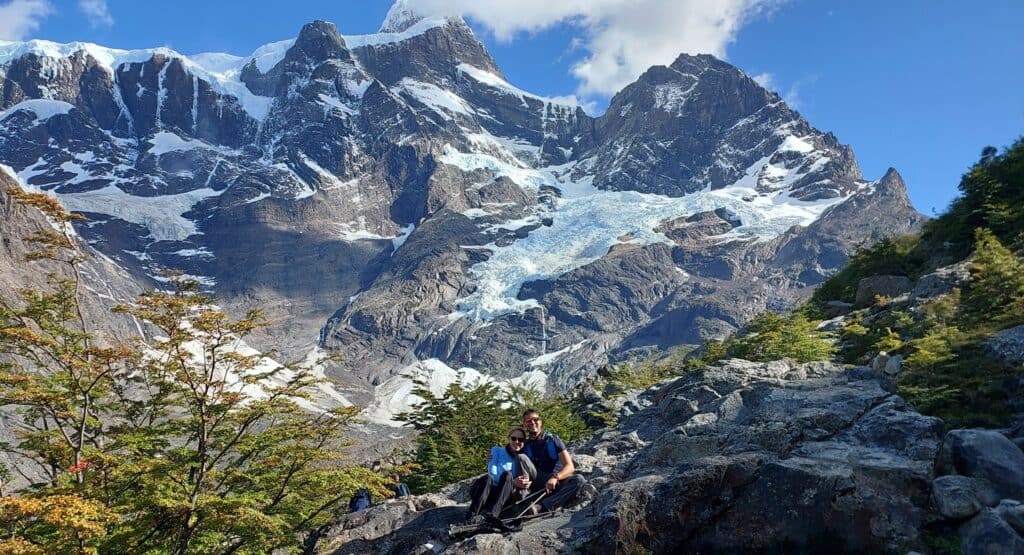
You hike for eight days in a loop that takes you behind the famous towers and deep into the raw, rugged heart of Patagonia. This is the kind of place where the wind can knock you off your feet (literally fell into a bush), where your feet stay wet for days, and the views are some of the best in the world. It is our favorite hike since Tour de Mont Blanc.
If that sounds miserable to you, maybe stick to the W Trek. But if you’re still reading, I’m guessing you’re the kind of person who thinks a good day is one that ends with sore legs, a full heart, and a ridiculous view. Welcome to the O.

Can you do the O Trek Patagonia without a guide?
Absolutely. The O Trek is well signalized. Download the GPS ahead of time to follow the daily trek but very easy to do without a guide.
O Trek or O Circuit? Same trail, two names
If you have been researching this hike you will have seen it called both, and it is worth clearing up before you start booking. They are the same trail: the full loop around the Paine massif in Torres del Paine National Park. Chilean park material and the booking platforms tend to use Circuito O or O Circuit — the guided version linked further down this page is sold as the “O Circuit” — while most English-language trip reports, this one included, call it the O Trek.
The one name that does mean something different is the W Trek, which covers only the southern half of the loop in four or five days. There is a full comparison of the O Trek and the W Trek further down. Search for O Trek or O Circuit and you will end up in the same place; search for the W and you are looking at a different hike.
What to Expect from the Refugios and Campsites
There are two companies that run all the campsites. Vertice and Las Torres. The Las Torres camps are nicer, but the infrastructure across the entire trek is impressive. If you’ve never done a multi-day trek like this, the refugios and campsites might surprise you—in both good and “oh wow, this is rustic” ways.
The O Trek Patagonia has a mix of options:
- Refugios (mountain lodges) are available at some camps like Dickson, Grey, Paine Grande, and Central. You’ll get a bunk bed in a shared dorm, showers, flushing toilets, and hot meals if you pre-book. There is very limited availability, so book when you can.
- Campsites range from full-service (you can rent a tent that’s already pitched, plus meals) to very basic (like Los Perros without hot water). All of them have toilets and running water.
- Showers? Most places have them. Hot water? Not always.
- Bathrooms? Every site had flushing toilets that were well stocked; we just might need to wait in line in the morning.
- Shops? Some camps (like Grey and Paine Grande) have small shops with overpriced snacks, wine, beer, and ramen. Prices are steep, but when you’re starving or craving a beer, it’s worth every peso. Every campsite took credit cards.
- Wifi? Most of the campsites offer wifi for pricey fee. It was $10 per hour or something ridiculous. We paid once in the middle of the trip but it was honestly nice to disconnect for a few days.
No matter where you stay, don’t expect luxury. Do expect incredible views, tired legs, and a shared sense of camaraderie with every other hiker you meet.
How to Book the O Trek Patagonia (Without Losing Your Mind)
There are many companies that will make all the bookings for you, so if that is within your Budget, it will save you the headache. Full O Trek Tour.

However, it is possible and cheaper to book the O Trek on your own. Booking the O Trek Patagonia can feel like solving a puzzle with missing pieces, as the websites are not great, and you need to book the campsites across multiple websites. Campsites are managed by two different organizations, and you’ll need to book each night individually, even though it’s one continuous trail. Here’s how to do it:
Step 1: Pick Your Dates, Route, Tent plan, and Food Included
- Duration: Decide how many days you want to take—8 is typical, though some squeeze it into seven or stretch it to 9. If you are reasonably fit, eight is very possible.
- Route: Hike the O in clockwise, starting at Serón and finishing at Torres. It is really nice to hike with your fellow O trekkers and meet friends a long the way.
- Tents: I highly recommend booking the campsites with the equipment. It was so nice to have everything set up when we arrived. It also was super helpful to have a lighter backpack across the 8 days of trekking. If you are on a strict budget, then you can hike with your tent, sleeping bag and mat and only rent the campsite each night, however, this is heavy on your back to hike for 8 days and setting up your tent after a long day hiking is exhausting.
- Food: At most of the campsites, there is a option for a full or half board menu. It is very expensive but after a long day of trekking, the hot meal just feels fantastic. I would recommend at least a few days with some food included to break up the freeze dried food. Most of the campsites are accessible by boat so the food was surprisingly very good at most campsites. Los Perros does not offer food so you need to a least hike with some food. The lunches included in the full board, were large enough to feed you through the day. Again, if you can afford, I recommend adding at least some stops with food.
Step 2: Book Your Campsites
There are two different operators:
- Las Torres – for Central, Serón, and Chileno → https://www.lastorres.com
- Vertice Patagonia – for Dickson, Los Perros, Grey, and Paine Grande https://www.verticepatagonia.cl
You’ll need to book every campsite in order and show proof of booking at the park entrance. Camps fill up quickly—especially between December and February—so try to book at least 6 months in advance.
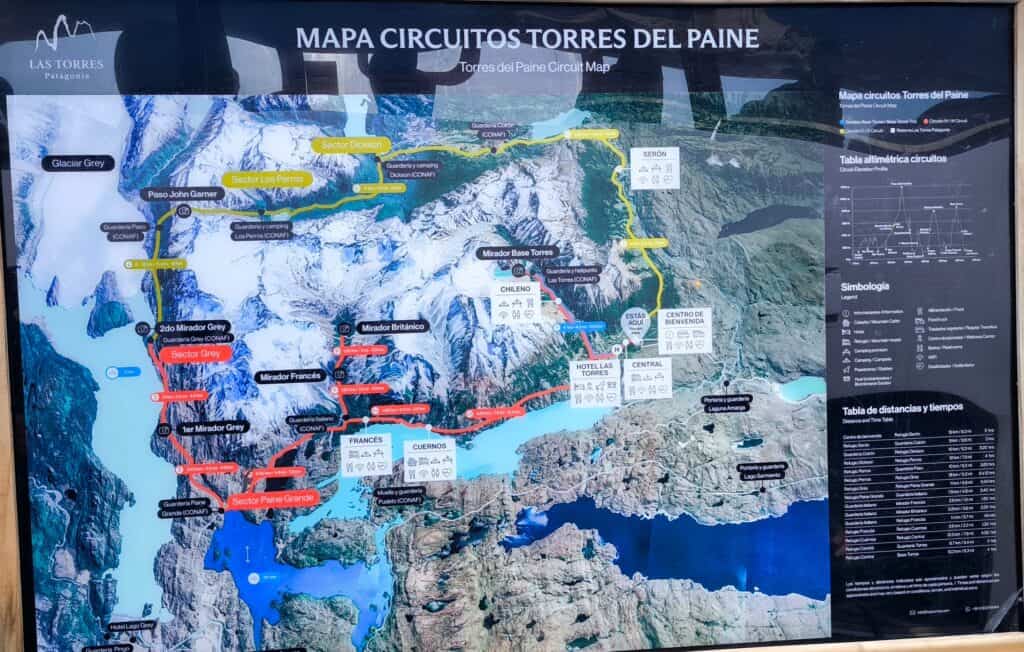
If you are doing the trek in 8 days: The order of the campsites is Seron, Dickson, Los Perros, Camp Grey, Paine Grande, Frances, Chileno (can also book Central). Important to book them in the correct order across the two sites.
Step 3: Reserve Transportation and the Park Entrance
Book your roundtrip bus from Puerto Natales to Laguna Amarga or Pudeto, depending on your route. Two main companies:
- Bus Sur
- Buses Gomez
We used Bus Sur, which had many options each day. Book at least a few weeks in advance.
Book the Park Entrance in advance as well. Take screenshots of all your bookings so you can access it without internet.
Step 4: Make sure you are covered with Insurance
Every time we travel, we rely on SafetyWing’s Nomad Insurance. I love how it covers unexpected medical needs, protects my gear, and even helps with travel delays. We use it on all our longer trips for coverage. The flexibility and price make it a no-brainer. If you want the same peace of mind, check it out SafetyWing here.
How Much Does the O Trek Cost? (And How to Do It on a Budget)
The O Trek Patagonia isn’t cheap—but it doesn’t have to break the bank either. Here’s a rough breakdown of what we spent (per person):
Park Entrance Fee:
- ~$49 USD for the >3 day Foreigner Pass (reserve in advance on the official park website. Just make sure to book the correct pass for your trip length.
Camping (with equipment vs. without):
- If you bring your own tent and cook your own food, campsites cost around $10–15 USD per night.
- If you rent equipment at the camps, prices jump to $100-130 USD per night, depending on the company.
- We rented a tent/sleeping bag/mat at all the locations and I would highly recommend this. Carrying your equipment for 8 days is heavy, and setting up your tent after 10 hours of hiking is exhausting.
Food:
- We got the full board at all the campsites with availability. It is expensive but a hot meal to end and start your day was worth it for us.
- Most campsites will have a prep area with a sink if you bring your own food. I would at least mix in some meals to breakup the freeze dried meals. Get all your food in Puerto Natales before you enter the park.
- Budget about $10 USD per day if you’re doing it all yourself and $100 per day if you are doing full board.
Transport:
- Bus to the park (from Puerto Natales): ~$20 USD round trip
- If you’re starting at Laguna Amarga, factor in the shuttle to the trailhead at Central (~$5 USD)
Total Budget (for 8 days):
- DIY budget version: ~$400 USD
- Comfort version (with rented tents/meals): ~$1,500 USD+
Booking tip: do it early, especially for peak season (Dec–Feb). Campsites for the O Trek are split across Vertice Patagonia and Las Torres, so you’ll need to coordinate bookings through multiple sites (yes, it’s annoying but doable).
O Trek vs. W Trek: Which One’s for You?
If you’re torn between the W Trek and the O Trek, here’s the deal:
- The W Trek is the shorter, more popular, more comfortable option. It hits the highlights—Grey Glacier, French Valley, and the Torres—over 4 or 5 days. You’ll find more people and more infrastructure, and if you book Refugios, you can do it with just a daypack and a camera.
- The O Trek Patagonia is for those who want to go deeper. You still get all the W Trek views at the end, but the first half—Serón, Dickson, Los Perros, the John Gardner Pass—is remote, quiet, and feels more like an expedition.
If you want a big adventure, go for the O Trek Patagonia. If your time is tight or you’re not up for hauling a backpack for 8 days, the W is still incredible. Either way, it’s Patagonia—you’re going to see some of the most beautiful landscapes on Earth.
O Trek Wrap Up
If you like hiking, do not hesitate to book this trip. We did it as the first week on our month long Patagonia adventure. It was just incredible with new vistas every single day. I can not recommend it enough. Follow it with trips through-out the region to El Chalten, El Calafate, and Punta Arenas. It is one of the most beautiful regions in the world so what are you waiting for?
Frequently Asked Questions
How many days do you need for the O Trek?
Eight days is typical and very doable if you are reasonably fit. Some people compress it into seven or stretch it to nine. Booking the campsites in order is what fixes your schedule, so decide the length before you book anything.
How far in advance do you need to book the campsites?
At least six months, and earlier if you are hiking between December and February when the camps fill fastest. Bookings run through two separate operators — Las Torres for Central, Serón and Chileno, and Vertice Patagonia for Dickson, Los Perros, Grey and Paine Grande — and you must show proof of every night at the park entrance.
Can you hike the O Trek in either direction?
No. The O runs clockwise, starting at Serón and finishing at Torres. One upside of everyone moving the same way is that you keep meeting the same trekkers, and by day three or four that turns into genuine company.
Should you rent camping equipment or carry your own?
Rent, if the budget allows. Booking campsites with equipment means the tent is already pitched when you arrive and your pack is far lighter across eight days. Carrying your own tent, bag and mat is cheaper, but pitching it after a long day of hiking is exhausting.
Are there showers and toilets on the O Trek?
Every site has flushing toilets and running water, and most have showers — though hot water is not guaranteed, and Los Perros has none. Some camps, including Grey and Paine Grande, have small shops selling snacks, beer and wine at steep prices, and all of them took credit cards.
Is there wifi on the trek?
Most campsites sell wifi, but at around ten dollars an hour it is worth going without. Several days offline is part of what makes the trek what it is.
