Is There Uber in Amsterdam? Getting Around, Honestly
Yes, Uber works in Amsterdam. The locals also use a very similar app called Bolt, which tends to be cheaper. After eight years here, I honestly still check both Uber and Bolt every time and pick the cheaper one.
Getting Around Amsterdam: What Each Option Costs
| Option | Typical cost | Best for | Avoid when |
|---|---|---|---|
| Tram, bus, metro (GVB) | €1.16 boarding + €0.217/km, capped at €10.50 a day | Almost everything. Fast, frequent, goes where you are going. | After roughly 00:30, when night buses take over |
| Bolt | Upfront price, usually a few euro under a metered cab | Late nights, luggage, groups splitting a fare. Wins on price more often than Uber does | Rush hour — you will sit in the same traffic as everyone else |
| Uber | Upfront price, occasionally undercuts Bolt | Same journeys as Bolt. Different algorithm, so always check both before booking | Same as Bolt |
| Metered taxi | Around €3.20 to start, roughly €2.20–2.40/km | Taxi ranks when your phone is dead | Anywhere near Centraal or Schiphol, where overcharging is a known problem |
| Bike | €10–15 a day to rent | The actual answer, if you are confident on one | Your first day, in the centre, in the rain |
| Car sharing | From €4.29/hour plus mileage | IKEA runs, beach days, day trips out of the city | Anything inside the centre — parking will ruin you |
Is There Uber in Amsterdam?
Yes. Uber has operated in Amsterdam for years and covers the whole city plus Schiphol. You will find UberX, Green, Van and Black depending on the time of day. There is also a Bolt (very similar app) here, which is often cheaper.
The more useful thing to know is that you should always check both, Uber and Bolt. Uber and Bolt use different pricing algorithms, and the same journey at the same moment can come out meaningfully cheaper on one than the other. Bolt wins most of the time in Amsterdam — it tends to have more drivers here — but not always, and it takes ten seconds to look. We have both on our phones and open both, every time.
The gap is widest when one of them is surging and the other is not, which happens more than you would expect: rain, rush hour, a concert emptying out. That is exactly when checking both is worth the most and when people are least inclined to bother.
Lyft does not operate anywhere in the Netherlands.
When an Uber Is Actually Worth It
Amsterdam is small. Genuinely small — you can walk across the centre in half an hour, and the tram network covers nearly everything else. Most journeys a visitor makes simply do not need a car.
The times it is worth it:
- Late at night with luggage. Trams stop around 00:30 and night buses run less often.
- Out to the edges. Sloterdijk, Zuidoost and parts of Noord are more lengthy by tram.
- Four of you going the same way. Split between a group it often beats four separate fares.
- Rain, with somewhere to be. No shame in it. Everyone does it.
The one journey where I would always recommend the train is: Schiphol to the Centre. A taxi or Uber runs somewhere in the €40–80 range depending on traffic and time. The train takes 17 minutes, runs up to eight times an hour, and costs under €7. There is no version of this where the car wins.
How Much Are Tram Tickets in Amsterdam?
Cheaper than most people expect, and you probably do not need to buy a ticket at all — just tap your contactless bank card or phone on the reader when you board, and again when you get off. That is OVpay, and it is what everyone here uses. Each passenger must use a different card if you are traveling with your family.
- Pay as you go (OVpay): €1.16 to board, plus €0.217 per kilometre. Capped at €10.50 per day per card.
- 1-hour ticket: €3.40, valid across tram, bus and metro including transfers.
- Day passes: €10 for 24 hours, €16 for 48, €21.50 for 72, up to €43 for a week.
- Night bus: €5.70, or free if you already hold a multi-day pass.
Two things that catch people out. You must check out as well as in — miss it and you are charged a deposit fare. And only present one card: if two contactless cards are in the same wallet, the reader may charge the wrong one, or fail entirely.
For short hops the distance fare beats the €3.40 single almost every time. The day pass only pays off from about the third ride.
The I amsterdam City Card: Transport Plus Everything Else
If you are visiting rather than living here, there is a shortcut that covers the transport question and most of the rest of your itinerary at the same time. The I amsterdam City Card includes unlimited GVB travel — tram, bus, metro and the ferries — for the whole period it is valid, so you can stop thinking about tapping in, distance fares and whether this particular hop is worth it.
On top of the transport it covers entry to more than 70 museums, a canal cruise and bike rental. It runs from 24 hours up to 120 hours. The honest maths: if you are seeing two or three museums a day and moving around the city between them, it pays for itself comfortably. If you are here for a weekend and plan on one museum and a lot of walking, it will not — buy a 48-hour GVB pass instead and save the difference.
One thing to know before you buy: the Van Gogh Museum and the Anne Frank House are not included, and both need booking separately and well in advance regardless of what else you have.
Do You Tip in Amsterdam?
Not really, and certainly not on the American scale. Service is included and staff are paid properly, so tipping here is a small gesture rather than an obligation.
- Restaurants, Cafes and Bars: round up, or add 5–10% if the meal was genuinely good.
- Taxis and Ubers: round up to the nearest euro or two. Nothing more is expected.
Nobody will chase you down the street.
When You Need a Car, Not a Ride
There is a category Uber does not cover well: you need a car for a few hours, not a lift across town. A trip to IKEA, a beach day in Zandvoort, a day trip to the Veluwe. Booking an Uber each way is expensive and leaves you stranded in between.
Car sharing solves it, and Amsterdam has more options than most cities. MyWheels is the one I use — you book a car parked near you, unlock it with your phone, and return it to the same spot. It starts at €4.29 an hour plus mileage, with fuel or charging included, and a daily cap between €35 and €49. The link below also gets you €25 off your first ride!
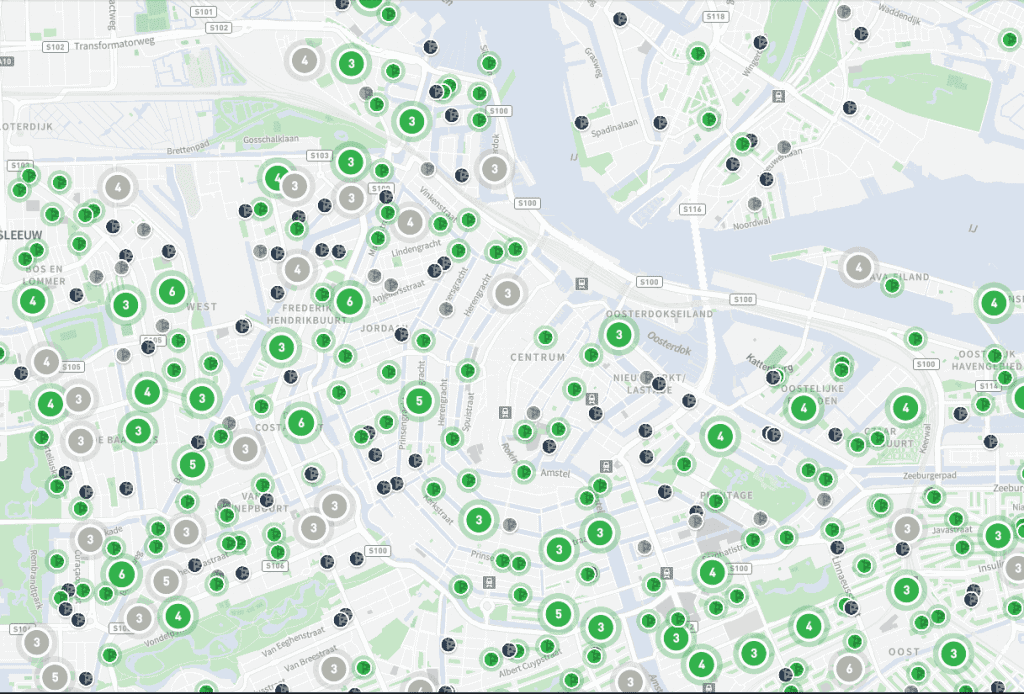
There are four main apps operating here and they suit quite different journeys — I have compared them all on price and coverage in the full guide to car sharing in Amsterdam.
Frequently Asked Questions
Does Amsterdam have Uber?
Yes, across the city and at Schiphol. Bolt operates here too. Install both and compare quotes before every ride — the two use different pricing algorithms, so the cheaper one varies by route and time of day. Bolt comes out lower more often than not, but not reliably enough to skip checking. Lyft does not operate in the Netherlands.
Is Uber cheaper than a taxi in Amsterdam?
Usually, and more importantly the price is fixed before you book. Metered taxis start around €3.20 and add roughly €2.20 to €2.40 per kilometre, so time stuck in traffic costs you. Amsterdam taxis have a long-standing reputation for overcharging tourists near Centraal and Schiphol, and an upfront app price removes that risk entirely.
Should I take an Uber from Schiphol to Amsterdam?
No. The train runs from directly from the airport (follow signs for the train), takes 17 to 20 minutes to Centraal, and costs under €7. A car will cost €40 to €80 and is not meaningfully faster. You can just use your contactless card to tap in and out of the train. There are readers before you go down the stairs to the tracks.
Do I need to buy a ticket before boarding a tram or train?
No. Tap a contactless bank card or phone on the reader as you board and again as you leave. Just make sure that you also check out when you leave the station.
Is the I amsterdam City Card worth it just for the transport?
On its own, no. A 72-hour GVB pass is €21.50 and covers the same trams, buses and metro. The card only makes sense if you are also using the museum access, the canal cruise and the bike rental it bundles in — at which point the free transport is a bonus rather than the reason to buy.
Is it safe to cycle in Amsterdam as a visitor?
It depends how confident you are. Amsterdam cycling is fast, dense and unforgiving of hesitation, and the centre is the worst place to learn. If you want to ride, a guided bike tour is a far gentler introduction than renting one and setting off alone.
Where You Are Probably Heading
Once you have worked out how to move around, the rest of it: our 3 day Amsterdam itinerary for how the city fits together, our 2 day version if you are here for a weekend, 25 brunch spots sorted by neighbourhood, and all 17 canal tours ranked if you would rather see the city from the water.
