
Travelling to Myanmar (Burma) – All you need to know
⚠️ IMPORTANT TRAVEL WARNING — READ BEFORE PLANNING A TRIP: The situation in Myanmar has changed dramatically since this post was written in 2012. Following a military coup in February 2021, the country has experienced ongoing civil war and armed conflict, and a 7.7-magnitude earthquake struck in March 2025. As of 2026, U.S. State Department has designated Myanmar a Level 4: Do Not Travel destination — its highest advisory level — citing armed conflict, civil unrest, landmines, and wrongful detentions. Australia, Canada, and Singapore have issued similarly serious warnings. Tourism continues in a limited way in the main “Tourist Kite” hubs (Yangon, Bagan, Mandalay, Inle Lake), but at roughly 15% of pre-2021 levels, and conditions can change quickly. If you’re still considering a trip, check your government’s current official travel advisory first, and speak with a local guide or tour operator about the current situation on the ground before finalizing any plans. We’ve updated the practical logistics below to reflect the current 2026 process, but please treat the travel warning above as the most important thing on this page.
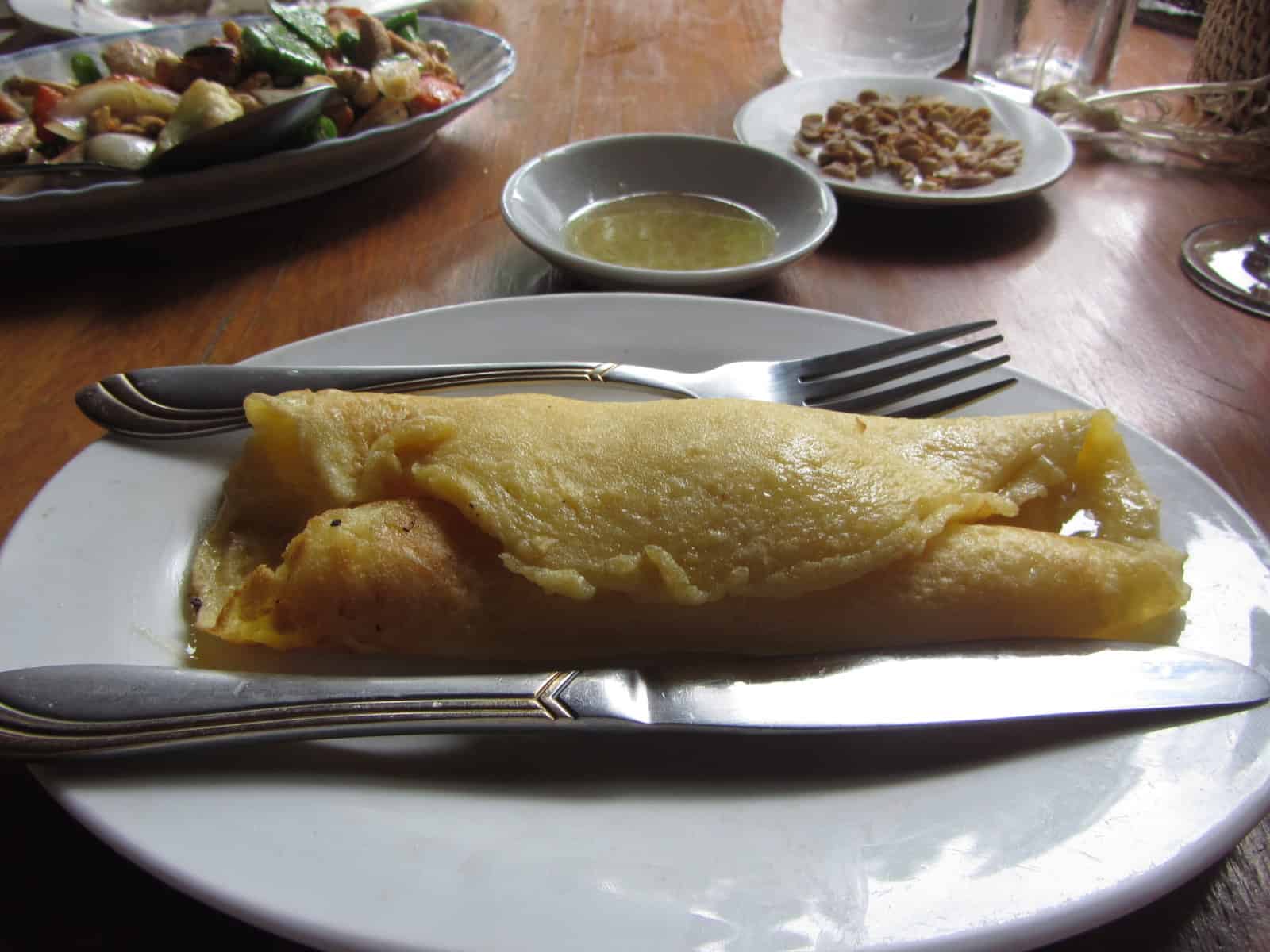
Travelling to Myanmar (Burma) has always been my dream… But actually I should have named this post “Myanmar, the country in which I had my very first banana pancake” and everything would have been said. Yes, it’s true. It was in Myanmar (Burma), more precisely at the restaurant “Cheriland” in Bagan, where I ate the very first banana pancake of my life. Banana Pancake Trail. Where everyone has already been in Southeast Asia. The trail beaten by hundreds and thousands of backpackers looking for adventures and individuality. It would never have surprised me in Thailand but I never ever would have expected this in Myanmar. Ok, one banana pancake please.
And all you need to know when travelling to Myanmar (Burma).
When to go:
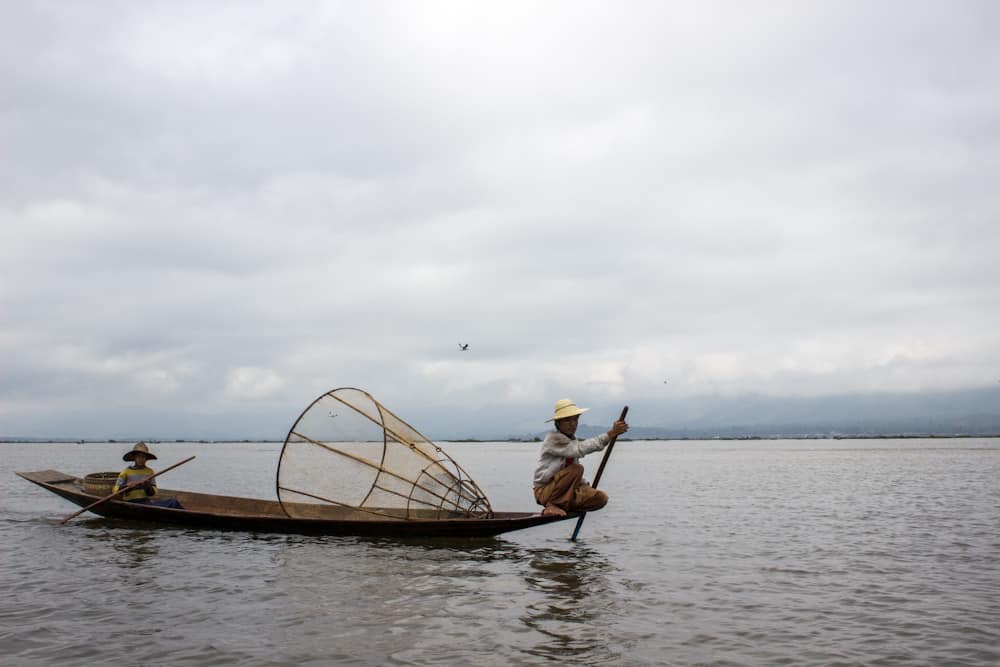
Weather-wise, the best time to visit is between November and January, after the rainy season. But given the current Level 4 Do Not Travel advisory (see warning above), the honest answer for most travelers right now is: not yet. If you do decide to go despite the advisory, that seasonal window still applies for weather, though even in the dry season you can have bad weather.
Where to go:
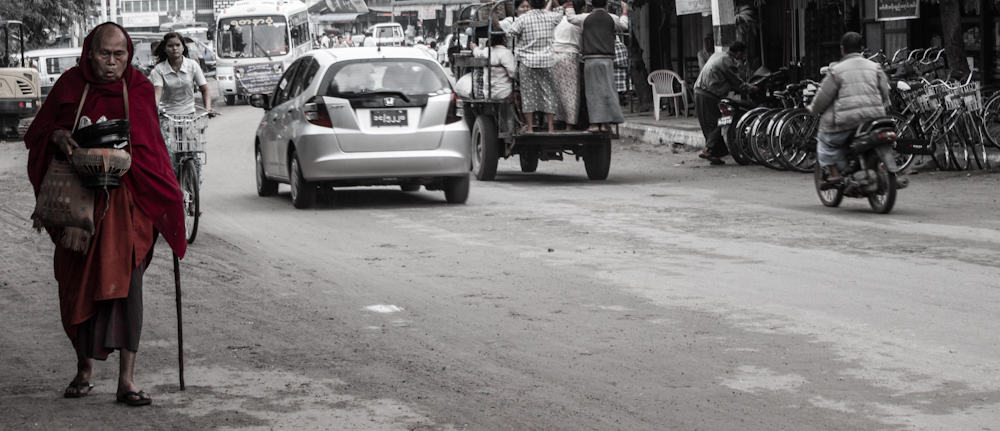
Myanmar’s (Burma’s) banana pancake trail is Yangon, Bagan, Inle Lake and Mandalay. These are still the main areas accessible to tourists — the so-called “Tourist Kite” — but the current reality is different from 2012: this is no longer about seeking a quieter, more “authentic” alternative to popular spots. Large parts of the country, particularly border states and regions with active conflict (Rakhine, Kachin, Kayah, Kayin, Chin, Mon states, and others), are simply off-limits or dangerous right now, not just “less touristy.” Check current, specific regional advisories before planning any route beyond the main hubs.
Visa (updated for 2026):
This section has changed completely since 2012 — you no longer need to visit an embassy in person at all. Most nationalities now apply for a Tourist eVisa entirely online at the official portal, evisa.moip.gov.mm. The fee is $50 USD, processing typically takes about 3 business days, and the visa is valid for single entry within 90 days of issue, for a stay of up to 28 days.
You’ll need: a passport valid at least 6 months beyond your departure date, a passport-style photo, proof of onward/return travel, and proof of accommodation for your first few nights. Visa on arrival still exists at Yangon, Mandalay, and Nay Pyi Taw international airports, but it’s currently limited to specific nationalities under time-limited bilateral arrangements that can change without notice — don’t count on it unless you’ve confirmed your specific eligibility directly with a Myanmar embassy first.
Money:
Myanmar’s banking system has faced real restrictions since 2021, and it remains largely a cash economy for travelers. International cards are unreliable outside major hotels in Yangon, and ATM access can be inconsistent. The old advice about bringing pristine, unfolded US dollar bills still holds — banks and money changers in Myanmar remain notoriously picky about the condition of foreign notes. Bring more cash than you think you’ll need, and don’t rely on being able to withdraw more once you’re there.
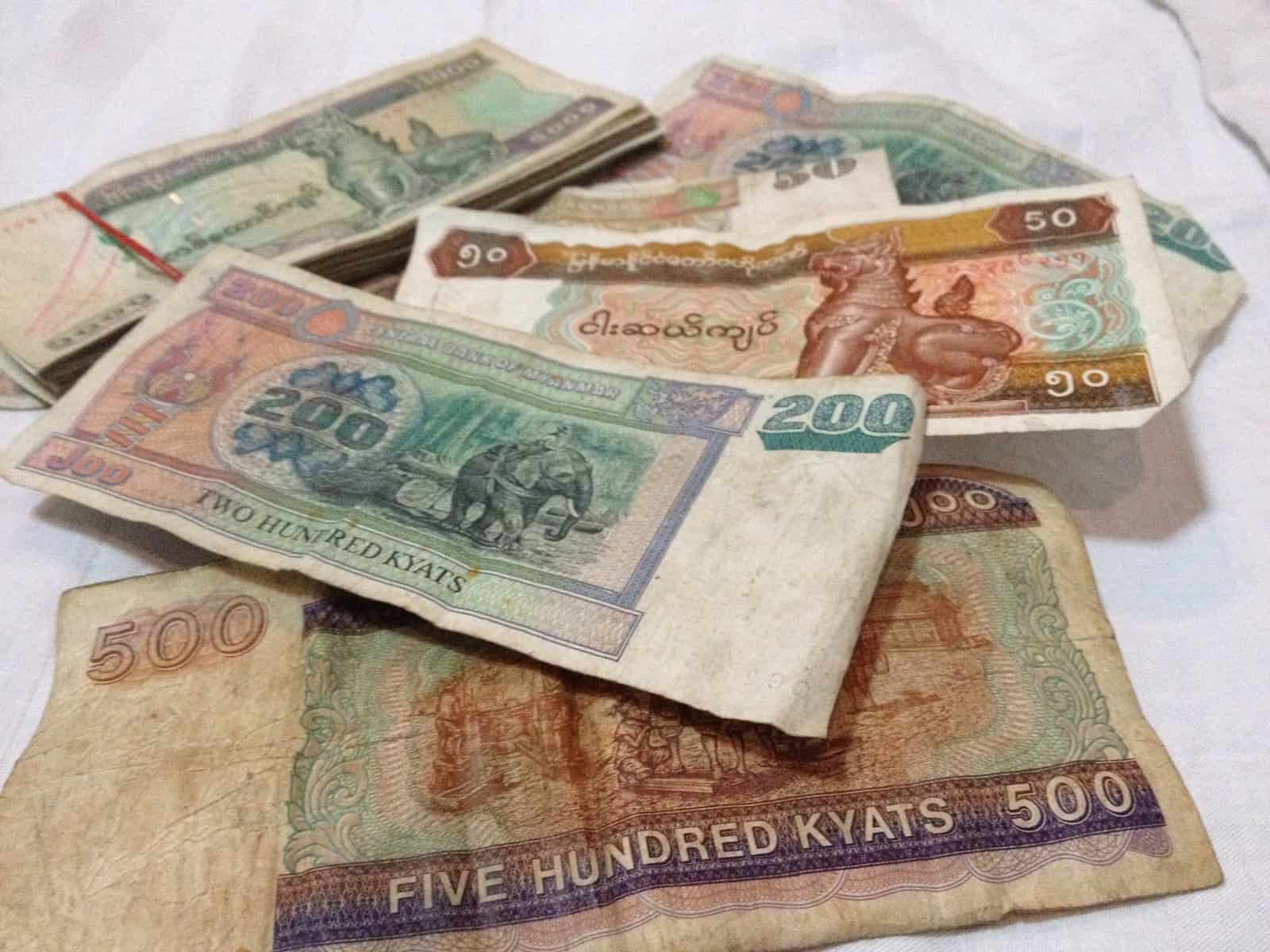
Kyat do not look very pristine in comparison to your Dollars…
After arriving in Myanmar you can exchange Dollars into Kyat, generally at the best rate through a bank. Avoid exchanging money in hotels or on the black market. It’s also worth carrying comprehensive travel insurance that explicitly covers conflict zones — standard policies often exclude coverage for countries under Level 4 advisories, so check the fine print before you go.
Food:
In my opinion, the food in Myanmar (Burma) is nothing really special. Fried rice, fried noodles, curry, banana pancake. Stuff you get everywhere in Southeast Asia. There is such a thing as Burmese cuisine but I’ve actually never really had the chance to try it and the things I’ve heard about it makes me think that I was lucky to do not. But I really loved the street food, especially the samosas and spring rolls.
Accommodation:
Tourist numbers are running at roughly 15% of pre-2021 levels, so availability in the main hubs is generally less of a squeeze than it was in 2012 — though standards outside 5-star properties can still be inconsistent. Given the current situation, book directly with hotels or through a local operator who can confirm current conditions, rather than relying on standard international booking platforms, which may not reflect what’s actually operating.

People:
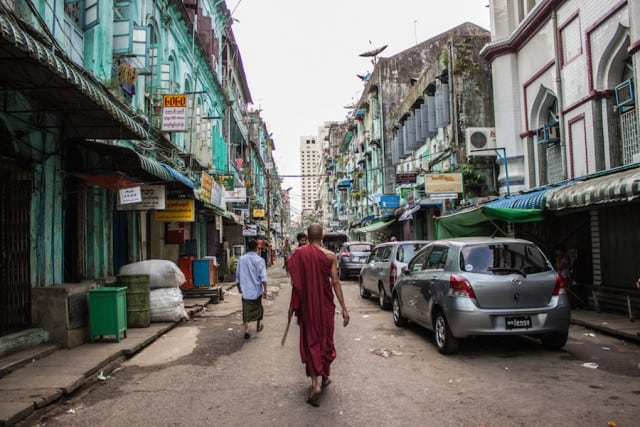
People in Myanmar (Burma) are incredibly friendly, open and interested. Walk through the streets with a smile on your face and you will have many lovely encounters. Please do also learn some words in Burmese like “Mingalaba” for “hello” and “Kscheitzutinbade” for “thank you”. Worth knowing: photographing protests, demonstrations, or security checkpoints can lead to arrest under the current government — be mindful of what you photograph.
Transport:
Domestic flights remain the fastest and most reliable way to get between the main hubs. Road travel, especially at night, carries elevated risk due to checkpoints and inconsistent road conditions — most current guidance recommends daytime travel only, and avoiding overland routes near border regions entirely.
Internet:
Internet access and reliability have improved significantly since 2012, though connectivity can still be restricted or disrupted, particularly during periods of unrest. Don’t rely on it being consistently available.
Given how quickly the situation in Myanmar continues to change, please always verify current conditions with your own government’s official travel advisory and a reputable local operator before making any plans, regardless of what’s written here.

